














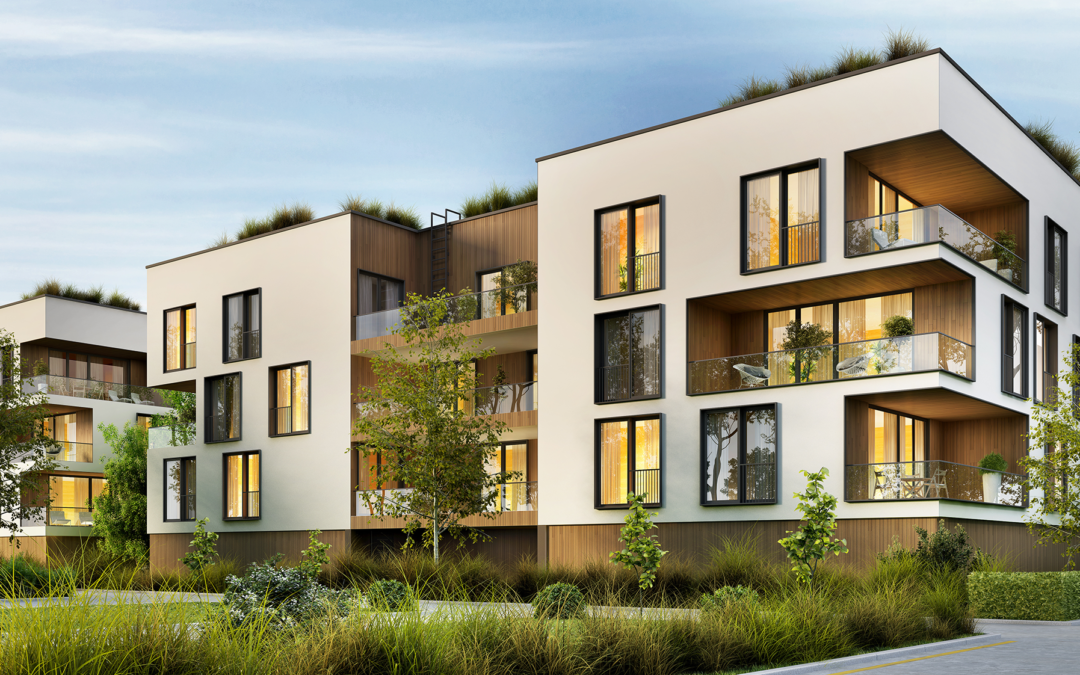
Energy efficiency in multifamily buildings has become essential as of 2026. The increase in utility costs, changing sustainability expectations, and heightened pressure to safeguard net operating income are compelling property owners and managers to reevaluate their energy consumption and management practices.
Current energy strategies for multifamily units extend well beyond mere conservation. Incorporating advanced HVAC controls, demand response initiatives, electrification, and data-informed building management, contemporary efficiency programs aim to lower operating expenses while ensuring — and frequently enhancing — tenant comfort.
Energy Efficiency Trends in Multifamily Buildings in 2026
In the following sections, we will examine the most significant energy efficiency trends influencing multifamily buildings in 2026, along with strategies for property managers to implement these trends to enhance long-term value without sacrificing the resident experience.
1. Smart HVAC Energy Management
Smart HVAC energy management continues to be one of the most impactful efficiency strategies for multifamily buildings in 2026. In large multifamily properties, space heating and related end uses account for roughly 70 % of total site energy consumption, making heating and cooling the largest contributors to energy spend. As a result, property managers are increasingly turning to intelligent HVAC controls to reduce waste without sacrificing resident comfort.
Modern HVAC energy management goes beyond scheduled setbacks. By using occupancy-based automation and real-time monitoring, smart systems can reduce unnecessary heating and cooling in both common areas and individual units when spaces are unoccupied. This helps minimize runtime, prevent overloading, and drive measurable reductions in energy consumption across entire portfolios.
For multifamily operators, the financial impact is significant. Smart HVAC energy management systems such as Verdant are widely recognized for delivering some of the fastest payback periods among building efficiency upgrades, with many properties achieving ROI within the first year of deployment. In addition to lowering operating costs, these systems can also support asset value by improving building performance and long-term efficiency.
2. Smart Thermostats
Smart climate control, of course, isn’t limited only to backend HVAC technologies. Another way that multifamily operators can improve the energy efficiency of their multifamily homes is by installing smart thermostats in both common areas and private units.
Essentially, smart thermostats allow both property managers and tenants to pre-program temperature settings around their preferences and occupancy patterns. For example, property managers themselves can program thermostats in common areas to adjust temperatures to align with high-traffic or occupancy times to ensure they are not heating or cooling vacant spaces. Similarly, tenants can program their thermostat to reduce energy consumption while they are not in the unit, allowing them to save on their own energy bills — which is a value-add that both improves tenant retention and supports occupancy goals.
Of course, multifamily operators and property managers should keep in mind that not all smart thermostats are created equal. Whereas consumer-grade brands (such as Nest and Ecobee) are suitable for single family properties, larger multifamily homes with a centralized HVAC system require commercial-grade smart thermostats that are capable of managing multiple units as well as common areas.
3. Sustainability Standards & Compliance
Sustainability in multifamily buildings has evolved from broad ESG positioning to a more practical focus on standards, compliance, and measurable outcomes. Rising energy costs, regional efficiency requirements, and investor expectations are pushing property managers to demonstrate that sustainability initiatives are not only implemented, but maintained over time.
Multifamily buildings account for an estimated 23% of U.S. residential energy consumption, making them a prime target for efficiency improvements that reduce operating costs at scale. Properties that meet established sustainability benchmarks — such as ENERGY STAR or LEED certification — typically operate with lower utility expenses, often in the range of 20% less than non-certified buildings. These savings directly support net operating income while strengthening long-term asset performance.
In response, multifamily operators are prioritizing upgrades that align with recognized energy efficiency standards. Common initiatives include deploying smart HVAC systems and thermostats, upgrading to energy-efficient lighting, integrating renewable energy sources such as solar, and implementing waste-reduction policies that support environmental compliance. Unlike one-time improvements, these measures are increasingly selected for their ability to support ongoing compliance and documentation.
In 2026, sustainability is less about labeling and more about readiness. Properties that demonstrate alignment with energy efficiency standards and document reductions in energy use gain a competitive edge. By meeting evolving sustainability requirements, they are better positioned to attract capital, qualify for incentive programs, and remain compliant in a tightening regulatory landscape.
For property owners looking to take actionable steps, our ebook, Sustainable Living Starts with Smarter Energy Management: A Guide for Property Owners, provides a practical roadmap for implementing energy-saving strategies, tracking performance, and aligning with sustainability standards across multifamily buildings.
4. Data-Driven Decision-Making
Multifamily property managers are increasingly using energy management data and reporting to cut costs and optimize building performance. By tracking real-time energy use across HVAC, lighting, and water systems, managers can uncover inefficiencies, prioritize upgrades, and improve tenant comfort.
Studies show that comprehensive energy management systems — including analytics, controls, and real-time monitoring — can deliver median energy savings of 11% – 22% in buildings by improving operational efficiency and reducing waste. Energy management platforms allow operators to benchmark performance, spot trends, and measure the impact of efficiency initiatives over time — turning raw data into actionable insights that support sustainability, operational transparency, and long-term asset value.
In addition to cost savings, data-driven decision-making helps property managers proactively plan maintenance, forecast energy budgets, and demonstrate performance to stakeholders. With detailed reporting, operators can show measurable results for sustainability initiatives, justify capital investments, and support compliance with efficiency standards.
5. Water Leak Detection
Smart water leak detection is becoming a key efficiency trend in multifamily buildings as operators look to reduce waste, avoid costly damage, and improve overall building performance. Undetected water leaks can impact multiple units and lead to significant repair costs, while smart leak systems help catch issues early and support proactive maintenance. According to industry insights, many multifamily managers report 20–25 % reductions in water usage after installing advanced metering and leak detection solutions, thanks to better visibility and quicker response.
In addition to utility savings, smart water leak sensors can help prevent extensive property damage and minimize maintenance workload by alerting staff in real time when a leak occurs, allowing for rapid action before issues escalate.
Many modern systems also integrate with other building controls — linking water sensors with smart thermostats and energy platforms to create a unified monitoring and alerting ecosystem. This integration offers multifamily operators a more complete view of building health, enabling both energy and water efficiency
6. Demand Response Strategies
Onsite4 energy management hardware is not the only way multifamily property managers can reduce their energy costs. In fact, multifamily operators turn their energy consumption into a source of revenue. Specifically, Demand Response Programs allow multifamily home operators to earn credits (or even outright cash incentives) against their energy bill whenever they choose to curb their consumption during peak demand times.
Demand Response Programs operate on an opt-in basis, and are typically offered directly through utility providers — but sometimes via independent, third-party entities. Essentially, Demand Response programs will notify property managers prior to a forecasted peak usage event, and unless the property manager opts-out of that event, their various onsite appliances (e.g. HVAC systems, water heaters, etc.) will adjust to draw less energy from the grid. This allows multifamily operators to “sell it back” to the grid, and that revenue can then be applied against their energy bills, reducing their overhead energy costs.
7. Tailored Energy Efficiency Strategies
Multifamily operators are increasingly adopting customized energy efficiency approaches that fit the unique needs of both new construction and retrofitted buildings. For new builds, this means designing with high-efficiency HVAC, smart lighting, advanced insulation, and integrated energy management from the ground up. For retrofits, targeted upgrades allow property managers to modernize systems, reduce energy waste, and improve tenant comfort without a full rebuild.
When paired with energy management platforms and smart thermostats, these tailored strategies provide real-time insights, measurable ROI, and documented sustainability outcomes. By aligning solutions to the specific building type and operational goals, operators can maximize energy savings, comply with evolving efficiency standards, and enhance long-term property value.
8. Smart Lighting
Of course, part of the energy costs of ‘keeping the lights on’ is actually keeping the lights on. And in this sense, smart lighting systems can help multifamily home managers and operators reduce both their own and their tenants’ energy costs.
Essentially, smart lighting employs occupancy sensors to respond to real-time occupancy patterns (similar to how smart HVAC technologies do) and time of day. It also provides tenants with a more seamless and comfortable experience as they enjoy both their units and common areas. Furthermore, it’s worth noting that many smart lighting systems can integrate with other third-party energy management systems.
9. Air Source Heat Pumps
Another HVAC hardware upgrade that multifamily property managers can invest in to reduce their energy costs is Air Source Heat Pumps (ASHPs). These reduce HVAC costs by transferring cold or warm air from outside a facility to the interior, further reducing HVAC runtimes, and ultimately reduce their energy consumption. ASHPs also offer the added advantage that they can be used as energy efficient space heaters (or coolers) to help manage energy consumption in areas of a property that are thermodynamically problematic — e.g. common areas that are either more poorly insulated or particularly high-traffic.
10. Adopting Renewable Energy
Of course, even more cost-effective than selling unused energy back to the grid is to not draw that energy from the grid in the first place. And this is precisely why some multifamily property operators are adopting more renewable and self-sufficient sources of energy.
Specifically, solar panels allow multifamily homes to reduce costs on both sides of the energy coin. On the cost side of the coin, solar panels reduce a property’s reliance on (and consumption from) mainstream power grids. On the revenue side of the coin, it allows property managers to sell back any surplus energy production to that grid.
So not only are multifamily operators able to reduce the energy costs for both them and their residents, but they can also create new revenue streams or energy cost saving through Demand Response Programs that they’ve already opted into.
Driving Energy Efficiency & Value in Multifamily Buildings
Multifamily properties depend on efficient infrastructure to deliver comfortable tenant experiences while maintaining profitability. Unlike other commercial properties, multifamily buildings can’t simply cut back on energy use without affecting residents, making smart energy management critical.
Fortunately, operators now have a wide array of tools to optimize energy consumption and reduce costs. From smart HVAC and lighting systems to renewable energy, water leak detection, and data-driven insights, these technologies help property managers lower overhead, enhance tenant satisfaction, support occupancy goals, and strengthen long-term financial performance.
By adopting these Top 10 energy efficiency trends, multifamily operators can stay ahead of evolving standards, maximize ROI, and position their buildings as sustainable, competitive, and resilient in today’s market.
Transform Your Multifamily Property with Verdant Energy Management
Solutions
Interested in reducing energy costs, improving tenant comfort, and maximizing ROI across your new construction or retrofitted multifamily properties? Verdant’s energy management solutions make it easy to monitor, control, and optimize your building systems. Our experts are ready to help you identify the right strategies for your portfolio.